How to Compare Wood Types for Everyday Furniture
Compare common furniture woods by grain, color, weight, and practical trade-offs, then choose a species that fits how you use a room.
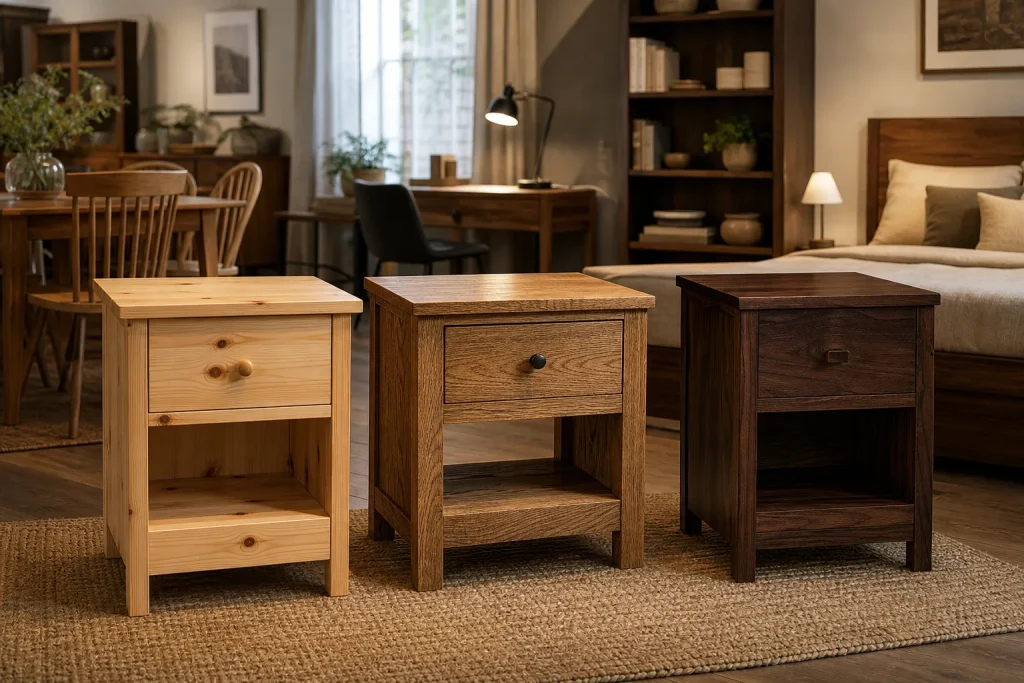
At a furniture showroom, two bedside tables can look nearly identical from across the room and feel quite different when you pull out a drawer. One may be made from oak, another from pine or walnut; their grain, color, weight, and response to wear all shape the everyday experience. Comparing wood types is easier when you look beyond the label and consider what the piece needs to do in your home.
Start with the way the furniture will be used
Before comparing species, picture the furniture in place. A dining table gets repeated contact from plates, sleeves, and household activity. A bookcase carries weight but sees less direct handling. A bedside table may need to move easily when you rearrange a room. These differences affect which trade-offs matter most.
Also check how the piece is constructed. A product described as oak may have solid oak parts, oak veneer over a stable panel, or a mixture of materials. Veneer is a thin layer of real wood attached to a core; it can provide the appearance of a species without making every part solid wood. Ask the seller which surfaces and structural parts use the named material, and look at edges, drawer sides, and the underside where construction may be visible.
Finish matters too. Clear finishes tend to show more of the wood’s natural color and pattern, while stains can alter the appearance. A photograph or small sample may not match the whole piece: grain varies from board to board, and light changes how a finish reads. If appearance is a priority, inspect the actual item in the light where you expect to use it.
Compare oak, pine, and walnut by character
Oak is a useful choice when you want visible grain and a familiar, substantial look. Its grain can be pronounced, with lines and patterns that remain noticeable under a clear finish. Oak furniture often feels visually grounded, which suits dining areas, living rooms, and other places where a piece is meant to anchor the space. The trade-off is that strong grain can draw attention; it may not suit a room where you want the furniture to blend quietly into the background.
Pine usually has a lighter appearance and a more open, relaxed character. Its knots and grain can make a piece feel informal, which works well in casual bedrooms, cottages, or rooms with painted and natural finishes together. Pine is generally lighter to move than many dense hardwoods, though the complete item’s size and construction also affect handling. Its softer surface can show dents and marks more readily, so it may suit someone who accepts a lived-in look better than someone seeking an unmarked surface.
Walnut is often chosen for its deeper brown tones and comparatively restrained grain. It can bring warmth and visual richness to a desk, cabinet, or occasional table without the strong contrast some oak displays. That darker color can make a piece stand out in a pale room, but it may feel visually heavy in a small or dim space. If the furniture will sit beside other wood pieces, compare the actual tones rather than assuming that all dark woods will coordinate.
These are general tendencies, not rules for every board or product. Species, cut, finish, and construction all affect the final appearance. A pale stain can change the impression of oak, while a knotty pine surface may look more patterned than a plain example. Treat the species name as one clue, then judge the finished furniture itself.
Use grain, color, and weight as practical clues
Grain describes the visible pattern in the wood. Stand back to judge whether it feels calm or busy in the room, then move closer to see whether knots, stripes, or changes in pattern appeal to you. Look across several surfaces. A top may show a different pattern from a drawer front, and a matching set may still have natural variation.
Color is best compared beside nearby materials. Hold a sample or view the furniture next to the flooring, rug, and other wood pieces. A warm brown can make a cool gray floor feel more contrasting; a pale wood may sit quietly beside light walls but look mismatched next to another pale wood with a different undertone. You do not need every wood tone to match exactly. Decide whether you want the piece to blend, coordinate, or stand apart.
Weight gives a rough sense of how easy a piece may be to reposition, but it is not a reliable shortcut for judging quality. A large cabinet made from a lighter wood can still be difficult to move, while a smaller piece made from denser wood may feel compact. Consider the whole object, including its dimensions, joinery, drawers, and any panels or hardware. If you expect to move furniture often, ask about delivery, assembly, and safe handling rather than relying on the species name alone.
Surface expectations are another useful filter. If a table will see frequent contact, ask the seller what finish it has and how the surface should be cared for. No wood type makes furniture immune to marks. A softer wood can suit a household that welcomes signs of use; someone who wants a pristine-looking surface may prefer a less easily marked option or a protective finish, while accepting that finish still needs appropriate care.
Choose according to the trade-off you can live with
Oak suits people who like visible grain and want a piece with a strong visual presence. Pine suits those who prefer a lighter, more casual look and are comfortable with surface marks accumulating as part of ordinary use. Walnut suits people drawn to deeper color and a quieter pattern, especially when the room can accommodate a darker focal point. None is automatically the best choice: the right option depends on the room, the task, and your tolerance for wear.
When comparing two pieces, use the same questions for each: Is the wood solid, veneered, or mixed? Does the grain suit the room? Does the color work beside nearby materials? Is the piece comfortable to handle or position? What finish is applied, and what care does the seller recommend? These questions help separate the appeal of a species from the value and construction of the specific item.
Hypothetical worked example: choosing a small writing desk
Hypothetical worked example. Imagine a renter choosing a writing desk for a softly lit bedroom with pale walls, a dark floor, and limited room to rearrange furniture. The available options are a knotty pine desk with a light finish, an oak desk with prominent grain, and a walnut desk with a deep brown finish. The desk will hold a laptop and notebooks, and the renter wants it to feel visually calm rather than become the room’s focal point.
The renter first checks whether each desk’s top and legs are solid wood or a combination, then compares finish samples beside the dark floor. The oak’s strong grain reads as a noticeable feature; walnut’s dark tone may add more visual weight than the room needs. The pine option looks lighter and less formal, but its visible knots are more varied than the renter prefers. The renter therefore chooses the oak only if a plainer-grained example is available; otherwise, the decision is to keep looking rather than buy on the species label alone. The expected result is a desk that better fits the room’s visual balance, with the trade-off that the renter must accept either oak’s more prominent pattern or the delay of finding a quieter alternative.
Make the final comparison in person when possible
Photos are helpful for narrowing options, but they compress the differences in grain and color. If you can visit a showroom, view the furniture from several angles and open its drawers. Check whether exposed edges reveal a veneer or a different material, and ask for clear information about construction and finish. If you are buying remotely, request photographs of the exact piece and written details about its materials; return terms may matter if the actual color differs from what you expected.
Choose the wood whose appearance you enjoy and whose likely wear suits your habits. A finish can soften or emphasize grain, and the construction can matter as much as the species. The most useful comparison is therefore not simply oak against pine or walnut; it is the whole piece against the work you need it to do in your home.